
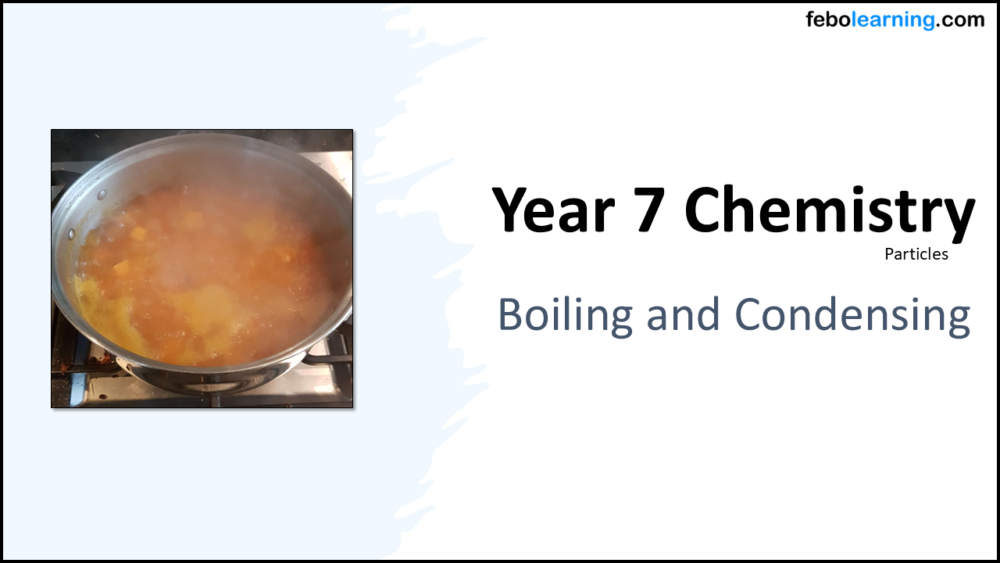
Year-7 Chemistry Particles: Boiling and Condensing
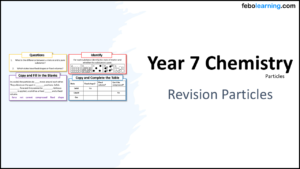
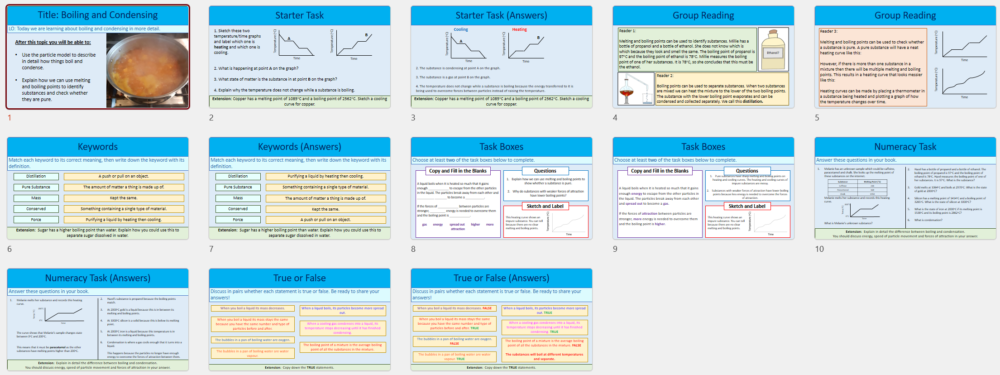
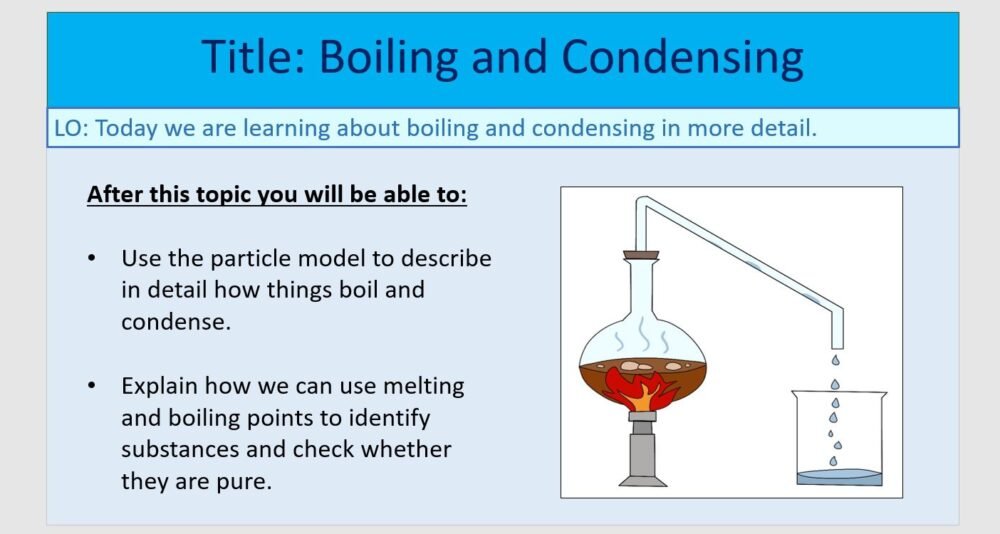
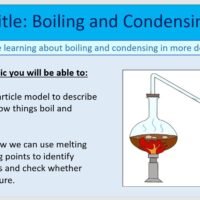
In this Year-7 Chemistry Particles: Boiling and Condensing lesson students will learn how to describe in detail how substances boil and condense and to explain how we can use melting and boiling points to identify substances and check whether they are pure.
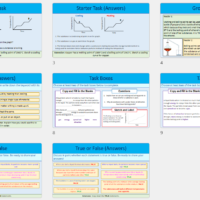
The slides include extension questions, and students can choose from a variety of different tasks.
This lesson includes:
- Title slide with learning objectives
- A starter activity
- A group reading task (literacy)
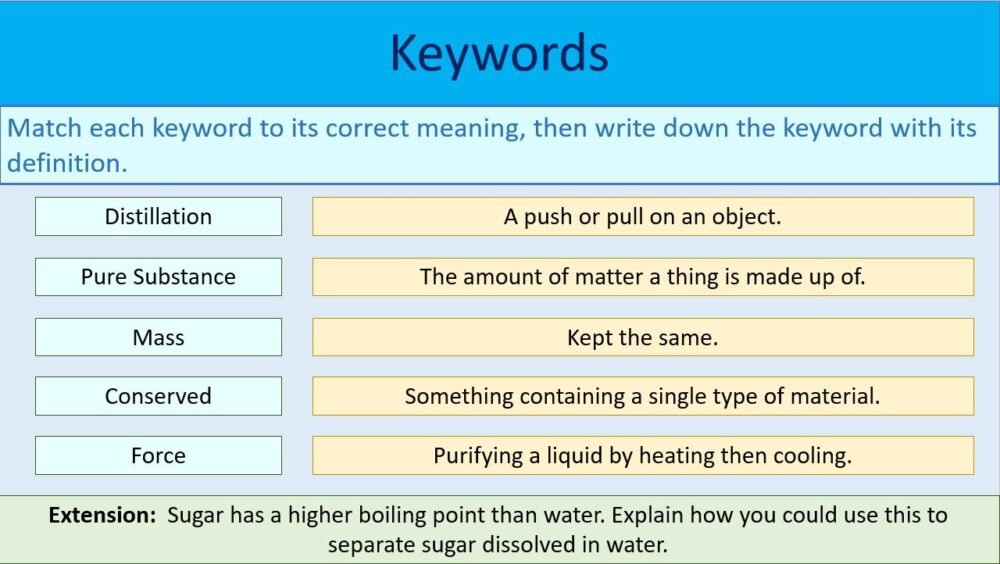
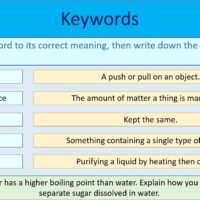
- Keywords sorting task (vocabulary: distillation, pure substance, mass, conserved and force)
- A task box exercise
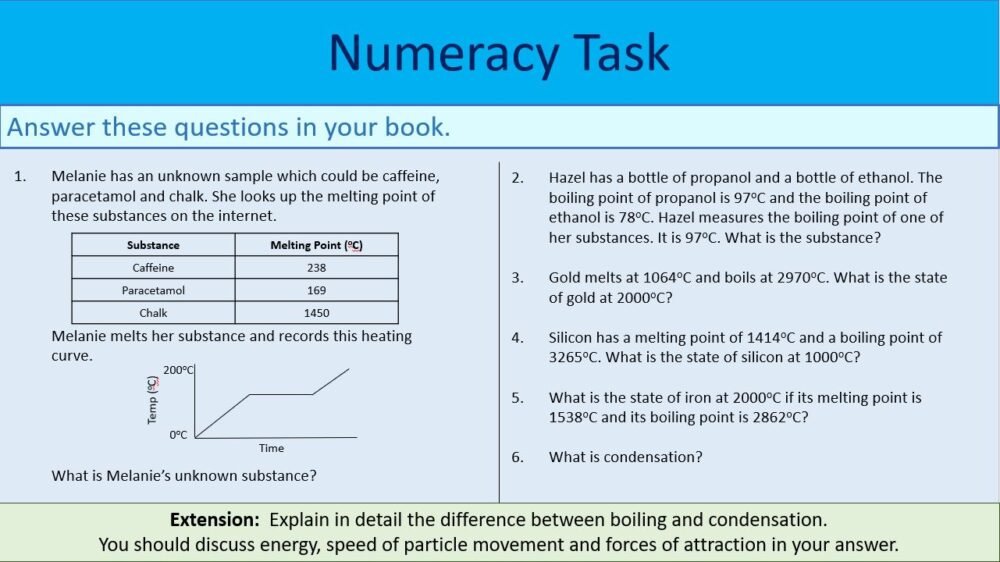
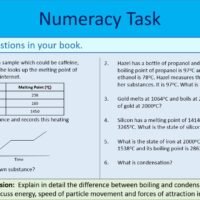
- A numeracy task to practice data interpretation and determining states of matter from melting and boiling points
- A true or false recap activity
- Answer slides included
Get this resource as part of the KS3 Chemistry: Particles Bundle Year 7 and save up to 33%
All content, diagrams and photos © Troilo Science / Febo Learning unless otherwise stated.
Next Lesson: Evaporation and Sublimation
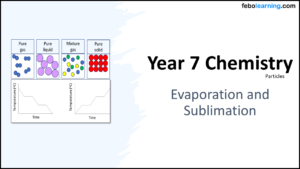
In this lesson students will learn how to explain why liquids can evaporate below their boiling point, explain why we sweat and describe sublimation and deposition.
Lessons for Key Stage 3, Year 7 Chemistry Topic 1 Particles
Particle Model
States of Matter
Melting and Freezing
Boiling and Condensing
Evaporation and Sublimation
Diffusion
Gas Pressure
Particles End of Topic Revision