
Year-7 Biology Reproduction: Flowers and Pollination
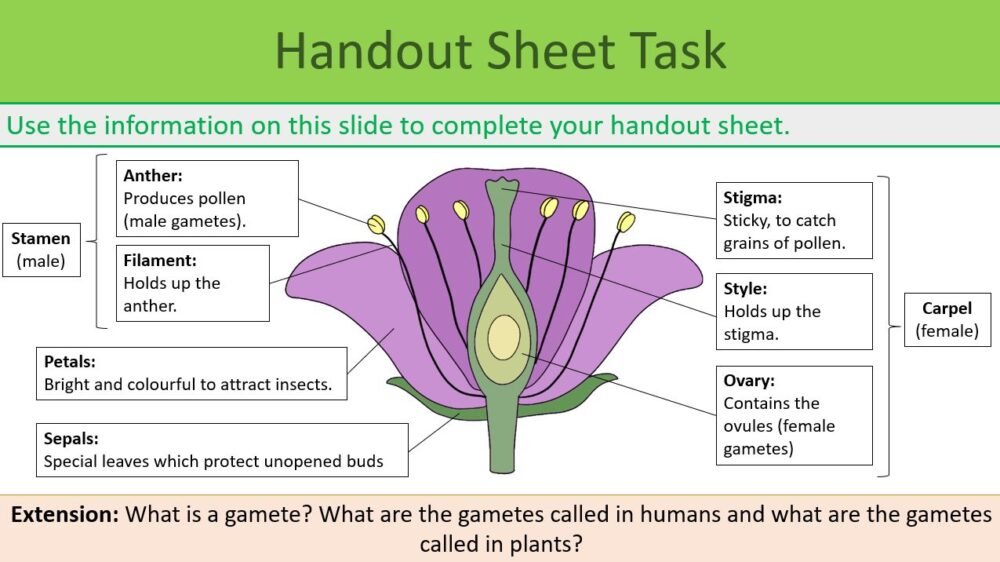
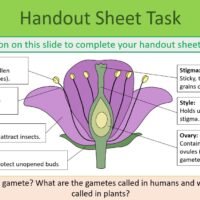
In this Year-7 Biology Reproduction: Flowers and Pollination lesson students will learn how to name the main structures of a flower, describe how flowering plants reproduce and explain the difference between wind-pollinated and insect-pollinated plants.
The slides include extension questions, and students can choose from a variety of different tasks.
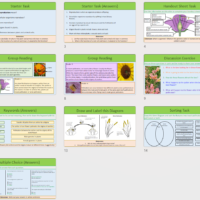
This lesson includes:
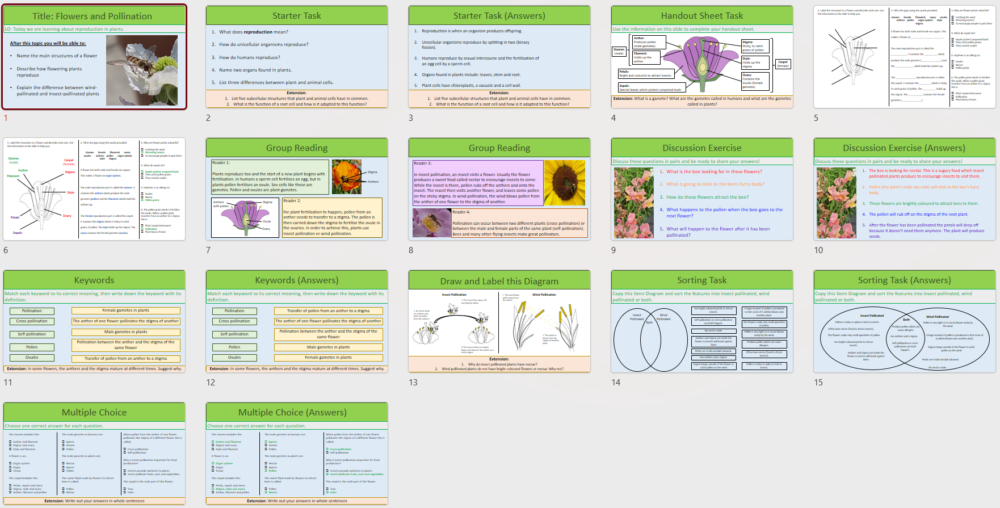
- Title slide with learning objectives
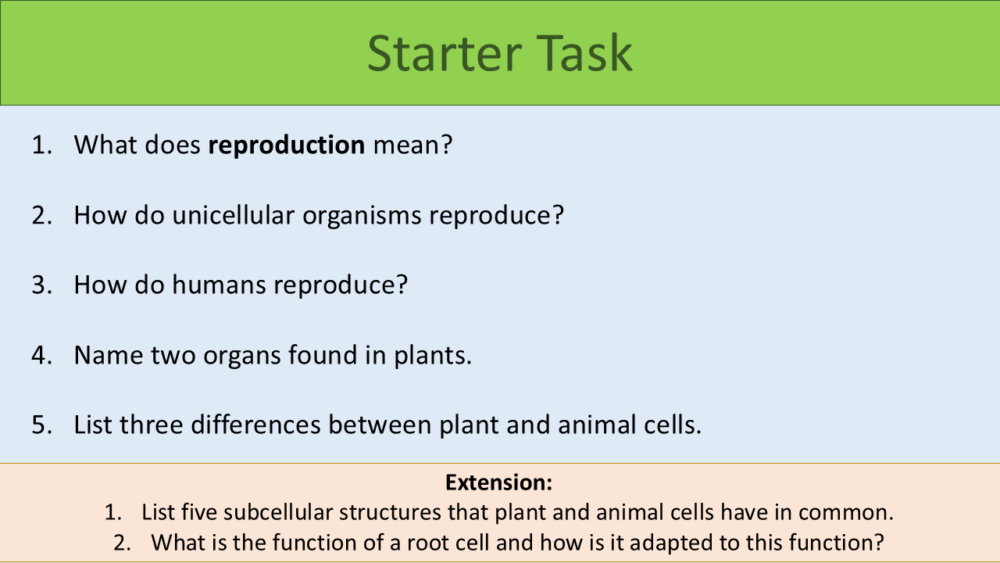
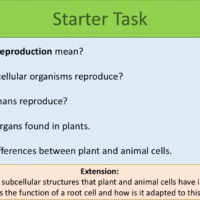
- Starter task (recall from previous units)
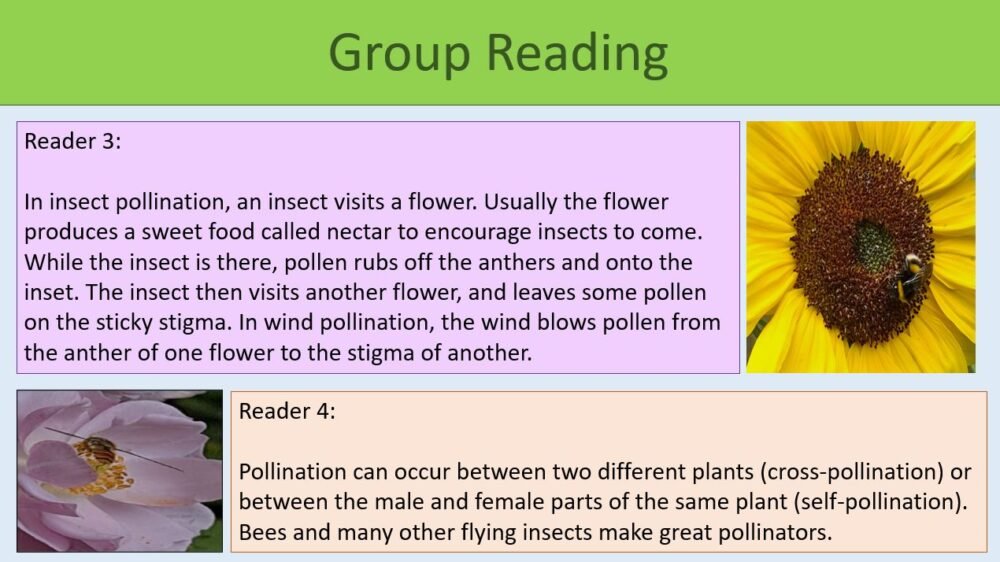
- Group reading task
- Discussion exercise
- Keywords task (vocabulary: pollination, cross-pollination, self-pollination, pollen and ovules)
- Order the steps of the menstrual cycle
- Draw and label the diagram (insect vs wind pollination)
- Sorting task (wind vs insect pollination
- Multiple choice task (recall from this lesson)
- All tasks, including the worksheet have an optional self-assessment slide. This presentation is fully editable.
Get this resource as part of the KS3 Biology: Reproduction Bundle Year 7 and save up to 33%
All content, diagrams and photos © Troilo Science / Febo Learning unless otherwise stated.
Next Lesson: Fertilisation and Germination
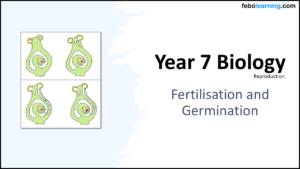
In this lesson students will learn how to describe how fertilisation happens in plants, explain how fruits and seeds are formed after fertilisation and explain what seeds need for growth.
Lessons for Key Stage 3, Year 7 Biology Topic 3 Reproduction
Adolescence
Reproductive Systems
Fertilisation and Implantation
Fetus Development
The Menstrual Cycle
Flowers and Pollination
Fertilisation and Germination
Seed Dispersal
Reproduction Revision Lesson