
GCSE Biology Topic 6: Speciation
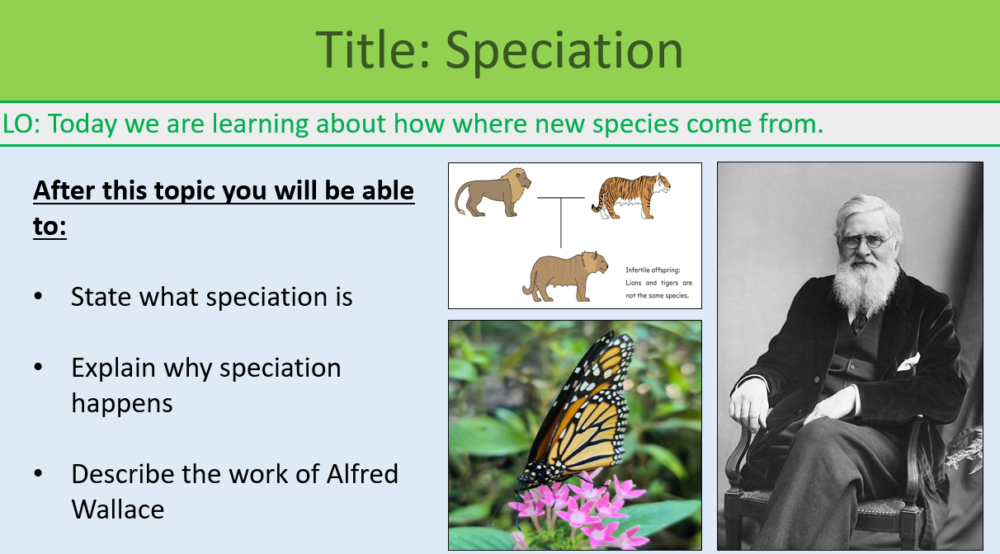
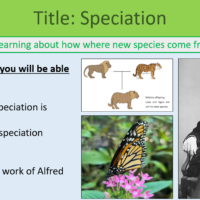
In this GCSE Biology Topic 6: Speciation lesson, students will state what speciation is, explain why speciation happens and describe the work of Alfred Wallace.
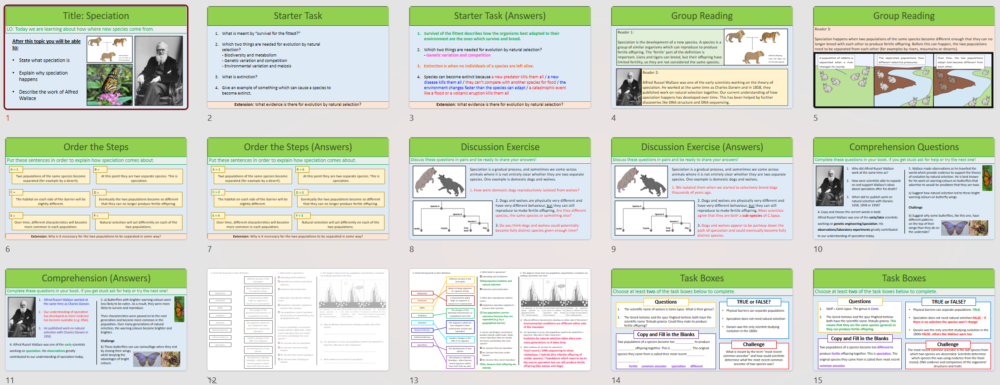
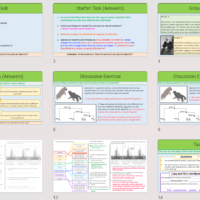
The slides include extension questions, and students can choose from a variety of different tasks.
This lesson includes:
- Title slide with learning objectives
- A starter activity
- Group reading (literacy)
- Order the steps
- Discussion exercise
- Comprehension questions
- Handout sheet task
- Task boxes
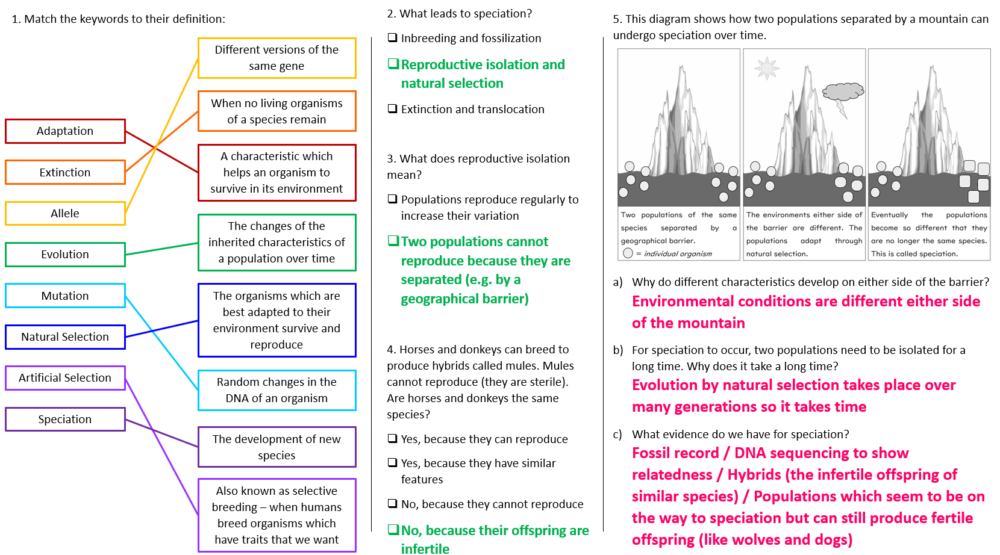
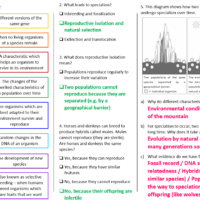
- Includes assessment for learning (AFL). Answer slides included for self-assessment
- Suitable for remote, online, distance learning
- Suitable for supply teaching and home learning. This activity is straightforward and requires no specialist expertise. It assumes that the previous content from topic 6 has been introduced but not necessarily mastered. Discussion/extension answers are in the ppt notes.
A supplementary resource designed to support self-directed learning, homework and independent projects is available here https://www.tes.com/teaching-resource/speciation-supplementary-slides-and-worksheet-gcse-biology-aqa-12974537
All content, diagrams and photos © Troilo Science / Febo Learning unless otherwise stated.
Next Lesson:
In this lesson, students will describe three ways in which fossils can form. They will explain how fossils provide evidence for how life on Earth developed.
Lessons for Key Stage 4 GCSE Biology Topic 6 Inheritance, Variation and Evolution
- DNA and Protein Synthesis
- Mutation
- Sexual Reproduction
- Asexual Reproduction
- X and Y Chromosomes
- Genetic Diagrams
- Inherited Disorders
- Gregor Mendel
- Variation
- Evolution
- Selective Breeding
- Genetic Engineering
- Cloning
- Fossils
- Speciation
- Classification and Evolutionary Trees
- Antibiotic Resistant Bacteria