
GCSE Biology Topic 6: Cloning
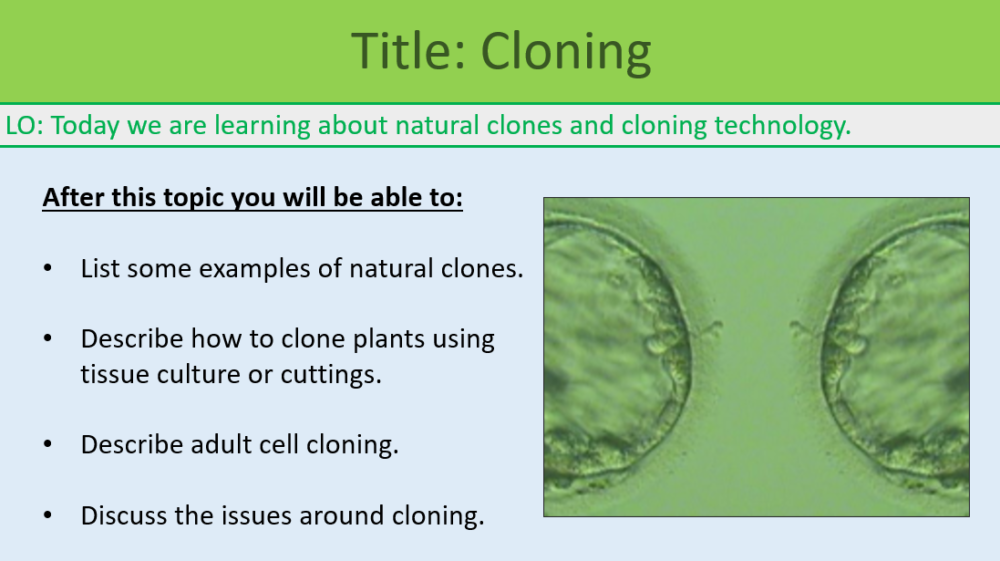
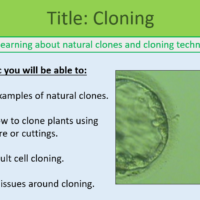
In this GCSE Biology Topic 6: Cloning lesson, students will list some examples of natural clones, describe how to clone plants using tissue culture or cuttings, describe adult cell cloning and artificial twinning and discuss the ethical issues around cloning. The slides include extension questions, and students can choose from a variety of different tasks.
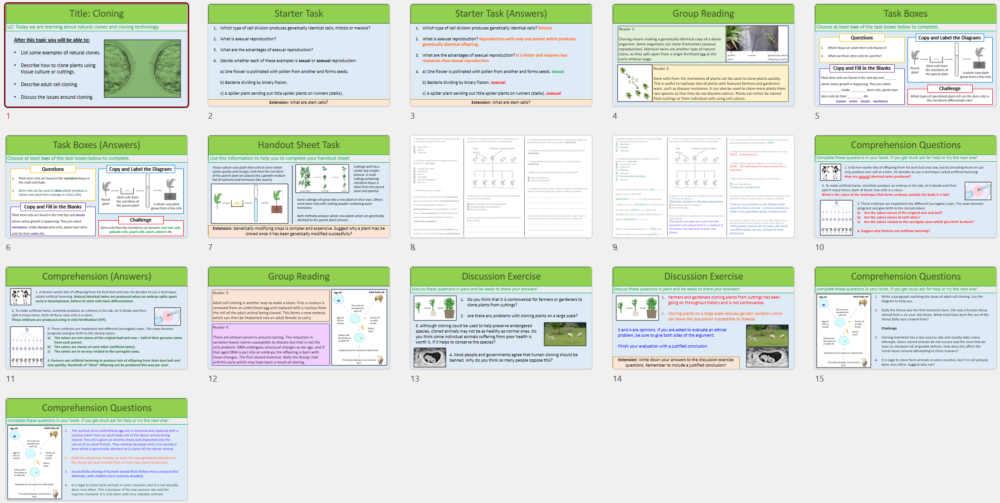
This lesson includes:
- Title slide with learning objectives
- A starter activity
- Group reading (literacy)
- Task boxes
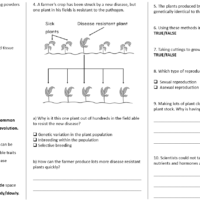
- Handout sheet task
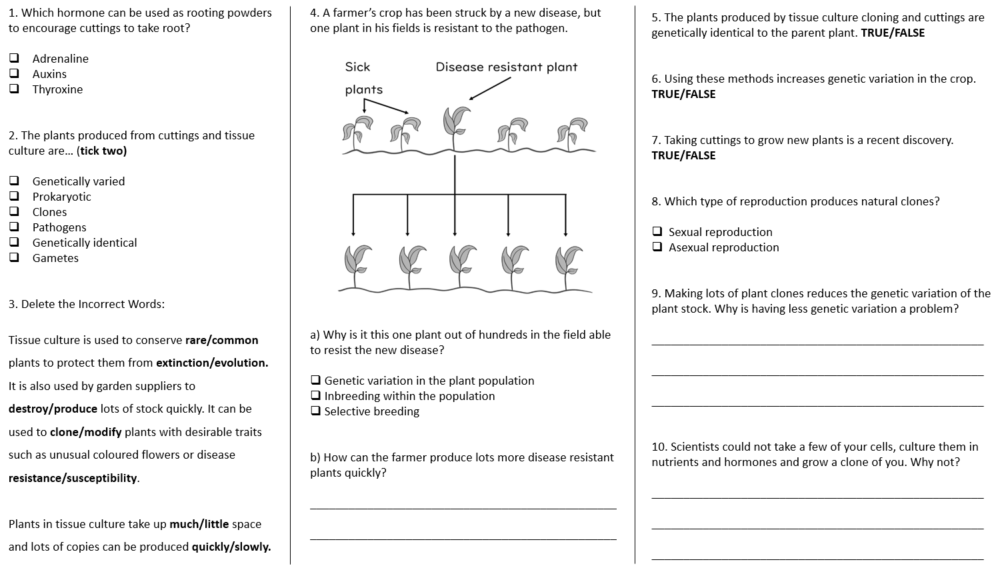
- Comprehension questions
- Discussion exercise
- Includes assessment for learning (AFL). Answer slides included for self-assessment
- Suitable for remote, online, distance learning
- Suitable for supply teaching and home learning. This activity is straightforward and requires no specialist expertise. It assumes that the previous content from topic 6 has been introduced but not necessarily mastered. Discussion/extension answers are in the ppt notes.
A supplementary resource designed to support self-directed learning, homework and independent projects is available here https://www.tes.com/teaching-resource/cloning-slides-and-worksheet-gcse-biology-aqa-12625511
All content, diagrams and photos © Troilo Science / Febo Learning unless otherwise stated.
Next Lesson: Fossils
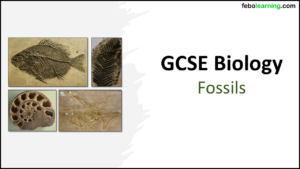
In this lesson, students will describe three ways in which fossils can form. They will explain how fossils provide evidence for how life on Earth developed.
Lessons for Key Stage 4 GCSE Biology Topic 6 Inheritance, Variation and Evolution
- DNA and Protein Synthesis
- Mutation
- Sexual Reproduction
- Asexual Reproduction
- X and Y Chromosomes
- Genetic Diagrams
- Inherited Disorders
- Gregor Mendel
- Variation
- Evolution
- Selective Breeding
- Genetic Engineering
- Cloning
- Fossils
- Speciation
- Classification and Evolutionary Trees
- Antibiotic Resistant Bacteria