
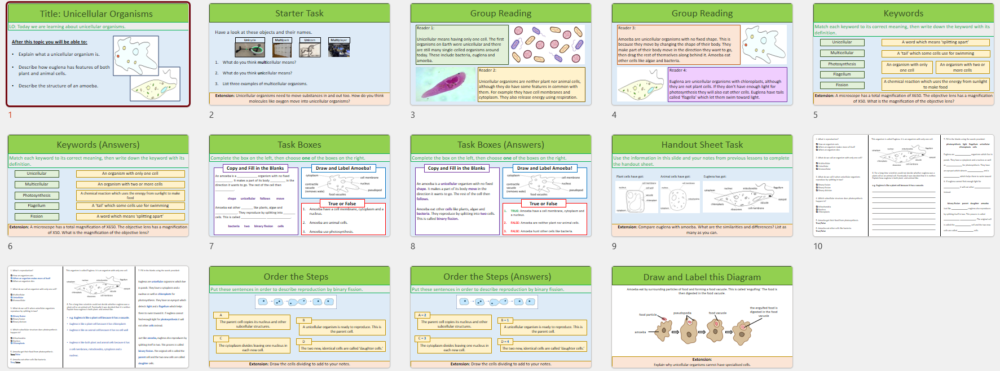
Year-7 Biology Cells: Unicellular Organisms
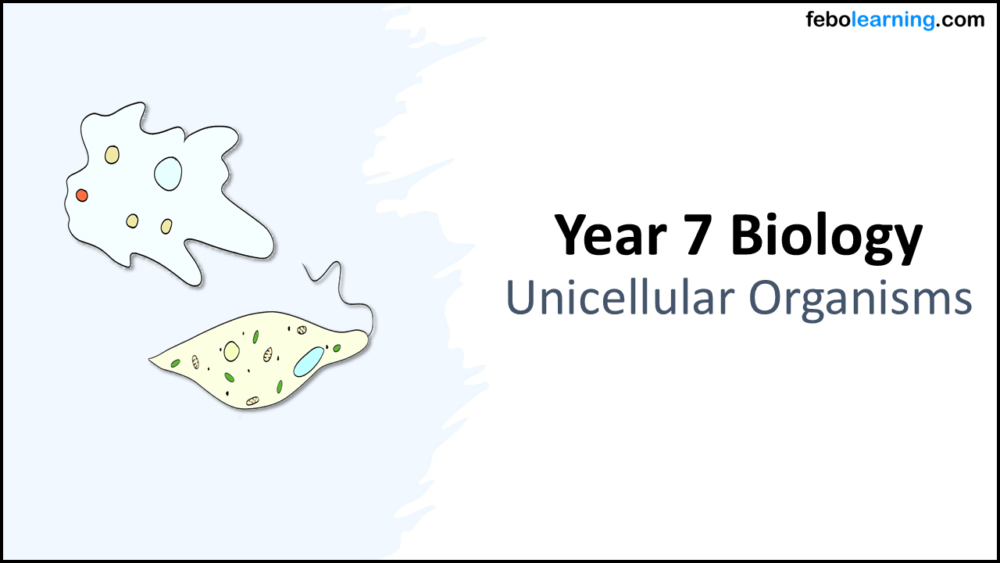
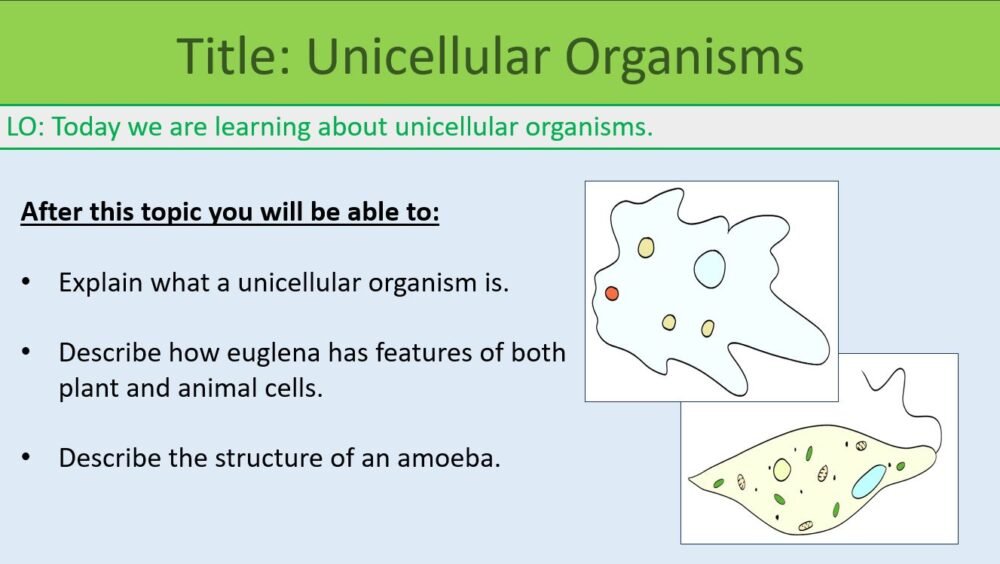
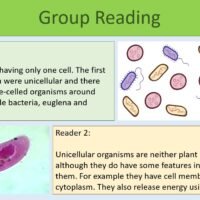
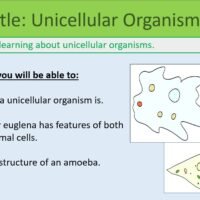
In this Year-7 Biology Cells: Unicellular Organisms lesson students will learn how to explain what a unicellular organism is, describe the structure of an amoeba and explain how euglena has features of both plant and animal cells.
The slides include extension questions, and students can choose from a variety of different tasks.
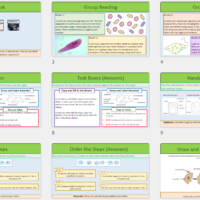
This lesson includes:
- Title slide with learning objectives
- Starter task
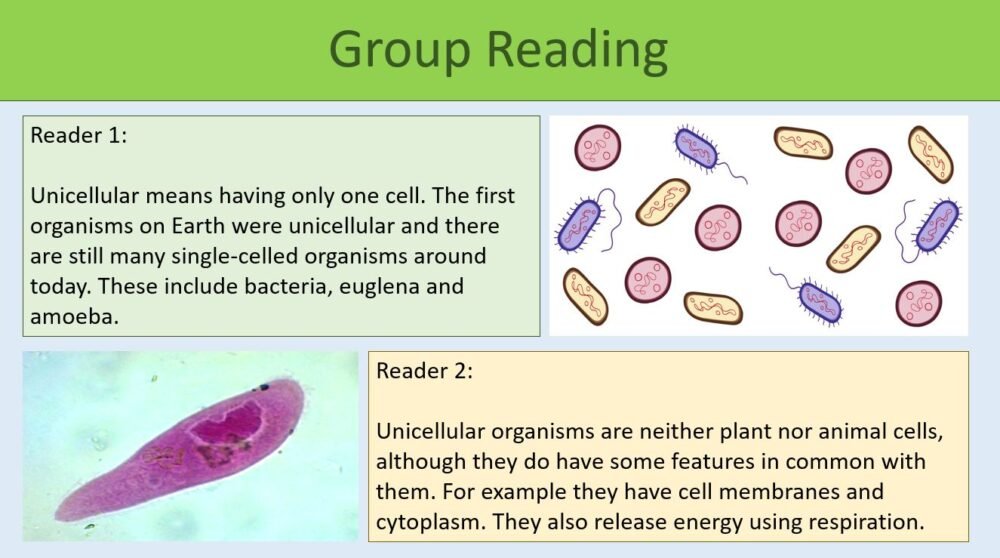
- Group reading task (literacy)
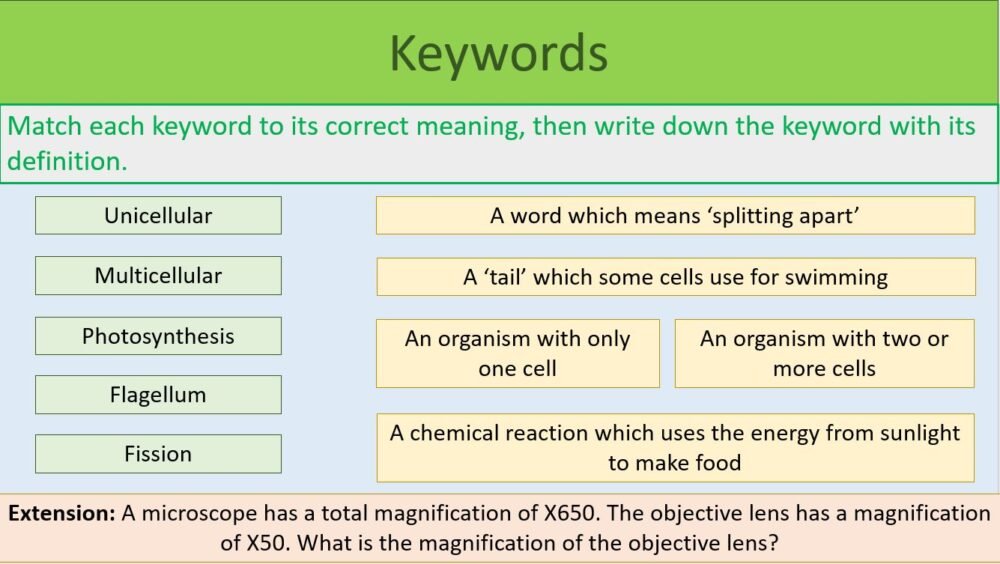
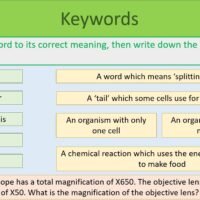
- Keywords activity (vocabulary: unicellular, multicellular, photosynthesis, flagellum and fission)
- Task boxes
- Handout sheet task
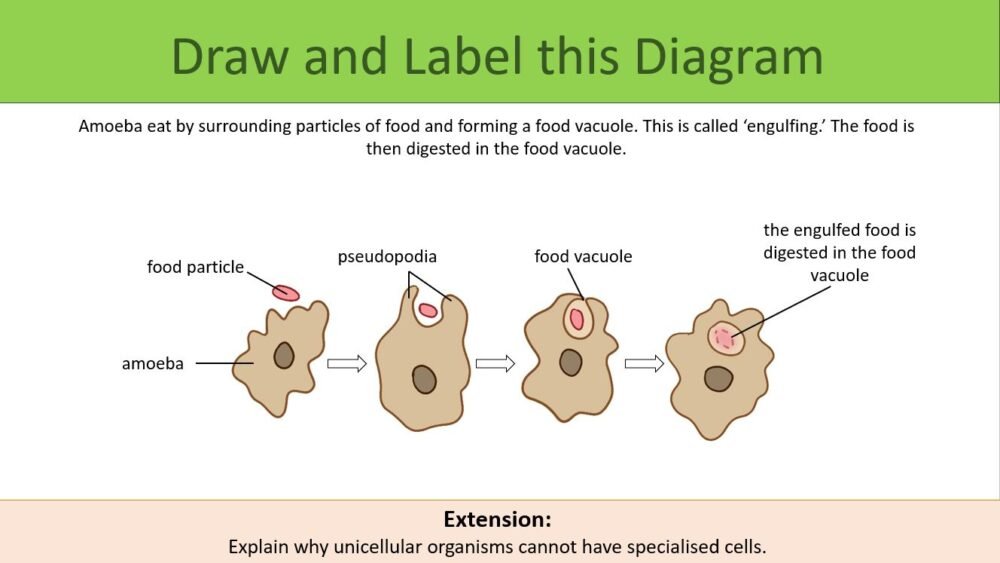
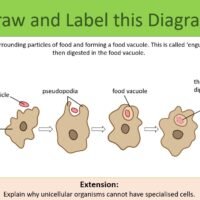
- Draw and label
- Putting the steps in order to describe a process
All tasks, including the worksheet have an optional self-assessment slide where needed. This presentation is fully editable.
Get this resource as part of the KS3 Biology: Cells Bundle Year 7 and save up to 33%
All content, diagrams and photos © Troilo Science / Febo Learning unless otherwise stated.
Next Lesson: Cells End of Topic Revision
This lesson covers the major topics from this unit and can be used to revise for end of topic tests or to address knowledge gaps identified in the end of topic assessments.
Lessons for Key Stage 3, Year 7 Biology Topic 1 Cells:
Observing Cells
Plant and Animal Cells
Specialised Cells
Movement of Substances
Unicellular Organisms
Cells End of Topic Revision