
GCSE Biology Topic 5: Plant Hormones
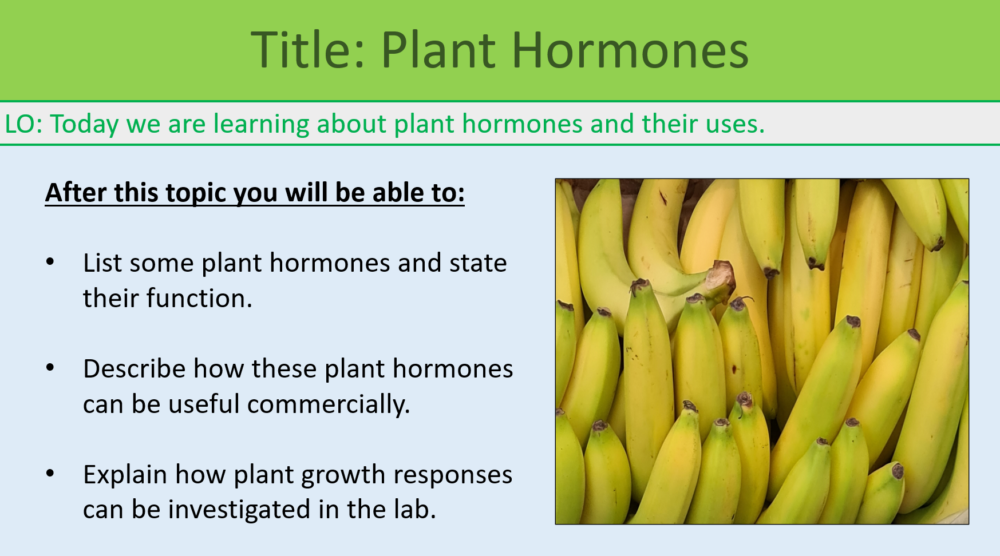
In this lesson, students will list some plant hormones and describe their functions. They will also discuss how people use these hormones in commercial settings. Finally, students will investigate plant responses in the lab and explain their findings. The slides include extension questions, and students can choose from a variety of different tasks.
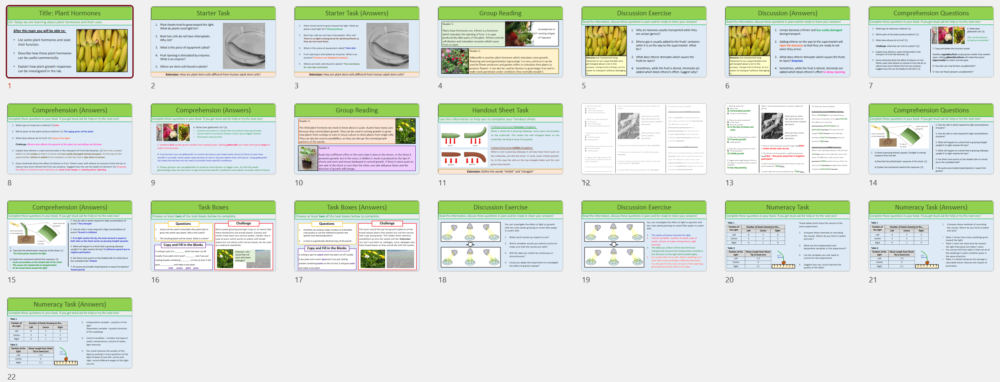
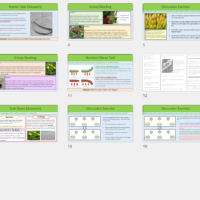
This lesson includes:
- Title slide with learning objectives
- A starter activity
- Group reading
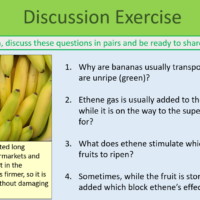
- Discussion Exercise
- Comprehension questions
- Handout sheet task
- Task boxes
- Data task (numeracy)
- Includes assessment for learning (AFL). Answer slides included for self-assessment
- Suitable for remote, online, distance learning
- Suitable for supply teaching and home learning. This is fully self-explanatory and can be delivered without specialist knowledge. It does assume that students have already covered the rest of the human endocrine system. Discussion/extension answers are in the ppt notes.
A supplementary resource designed to support self-directed learning, homework and independent projects is available here https://www.tes.com/teaching-resource/plant-hormones-supplementary-slides-and-worksheet-gcse-biology-aqa-12368242
All content, diagrams and photos © Troilo Science / Febo Learning unless otherwise stated.
Next Lesson: Topic 6 Inheritance, Variation and Evolution: DNA and Protein Synthesis
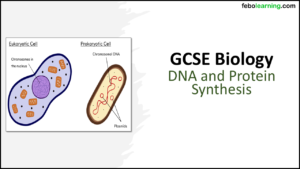
In this lesson, students will define key vocabulary like genes and genome, describe the structure of DNA and where it is found, state the steps of protein synthesis and explain the role of proteins in biology.
Lessons for Key Stage 4 GCSE Biology Topic Homeostasis
- Homeostasis
- Nervous System
- Reflexes
- Reaction Times Practical
- The Brain
- The Eye
- Correcting Vision Defects
- Body Temperature
- The Endocrine System
- Comparing Nerves and Hormones
- Blood Glucose and Diabetes
- Kidneys
- Kidney Failure
- Menstrual Cycle
- Controlling Fertility
- Adrenaline and Thyroxine
- Plant Hormones