

GCSE Biology Topic 4: Anaerobic Respiration
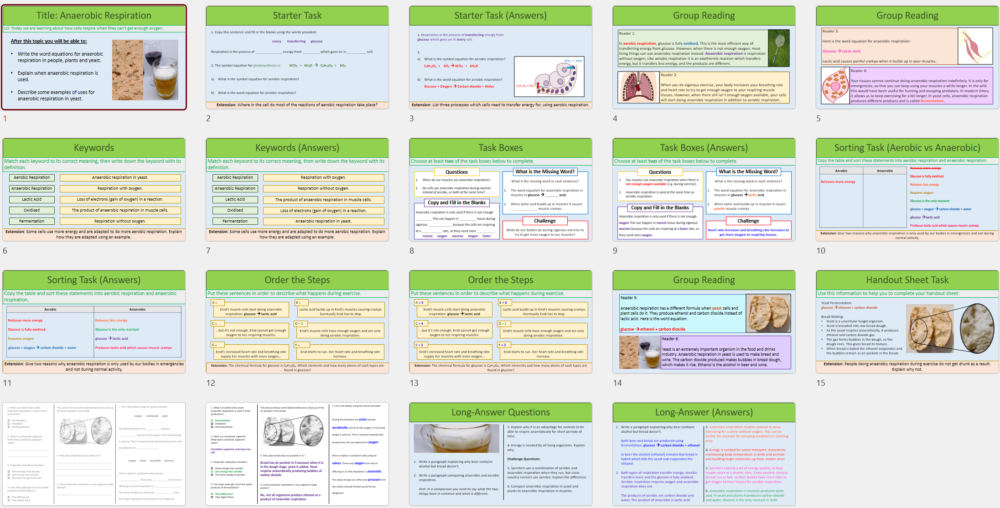
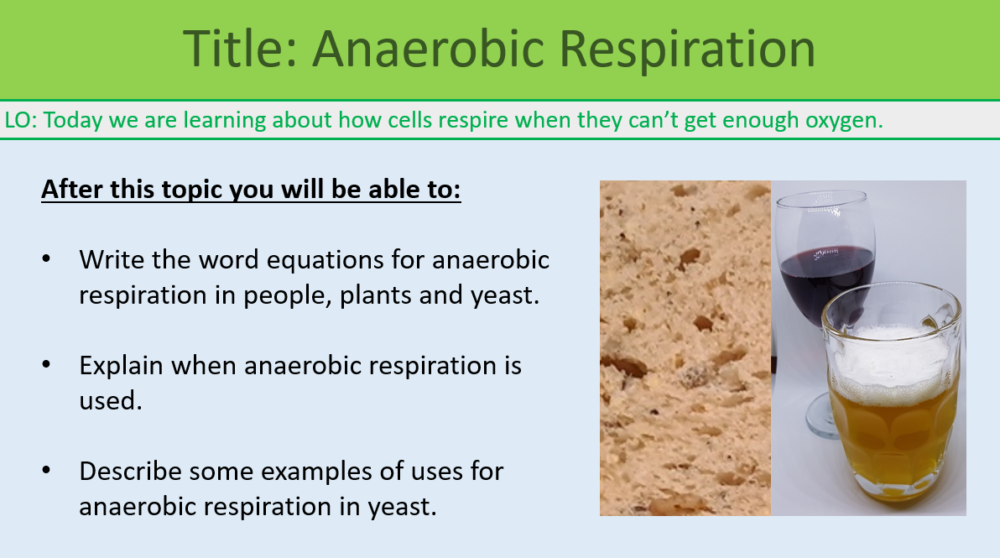
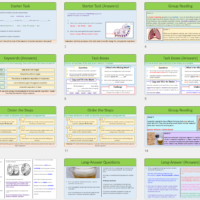
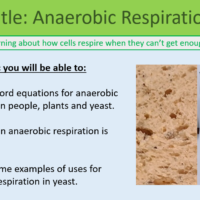
In this GCSE Biology Topic 4: Anaerobic Respiration lesson, pupils will write the word equations for anaerobic respiration in people, plants and yeast. They will go on to explain why anaerobic respiration is used. Finally they will compare anaerobic to aerobic respiration and describe some examples of anaerobic respiration in yeast.
The slides include extension questions, and students can choose from a variety of different tasks.
This activity is straightforward and requires no specialist expertise, except for knowledge of the term ‘pathogen’, which refers to a microorganism that causes disease (germs).
Note: This lesson does not cover Oxygen Debt – see next lesson.
This lesson includes:
- Title slide with learning objectives
- A starter activity
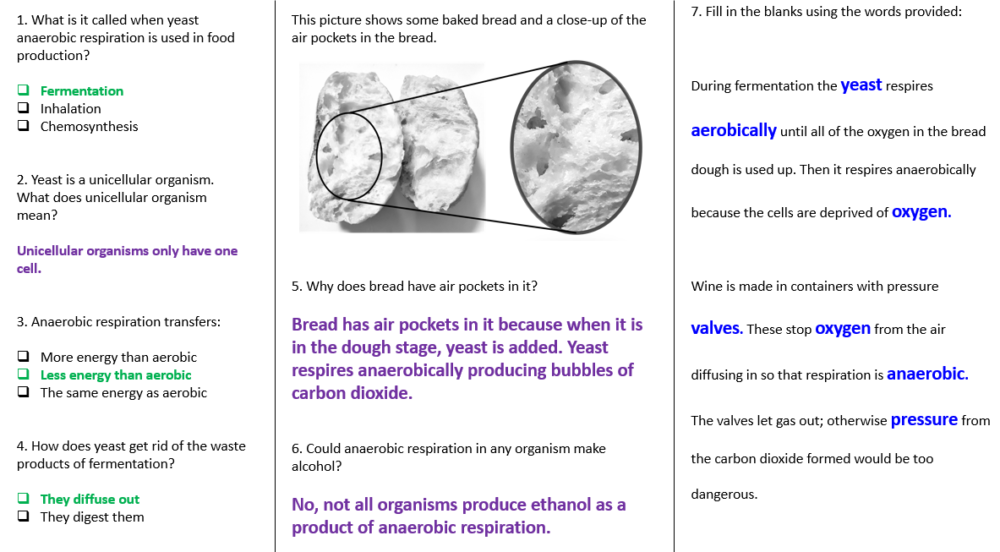
- Group reading (literacy)
- Keywords (vocabulary; anaerobic respiration, aerobic respiration, lactic acid, oxidized and fermentation)
- Task boxes
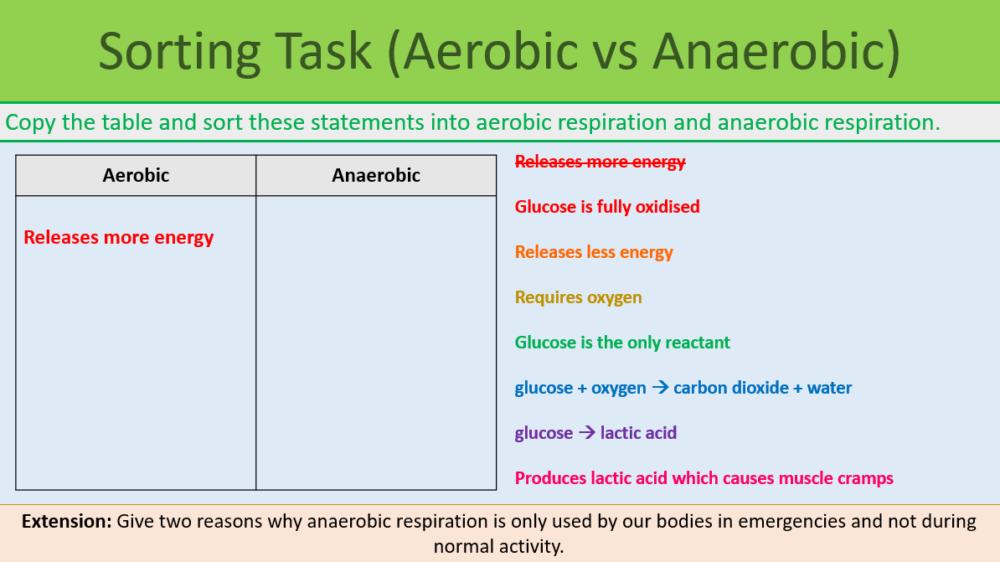
- Sorting Task
- Order the steps
- Handout sheet task
- Long answer questions
- Answer slides included for self-assessment
- Suitable for remote, online, distance learning
- Suitable for supply teaching and home learning.
A supplementary resource designed to support self-directed learning, homework and independent projects is available here https://www.tes.com/teaching-resource/respiration-supplementary-slides-and-worksheet-gcse-biology-aqa-12360359
All content, diagrams and photos © Troilo Science / Febo Learning unless otherwise stated.
Next Lesson: Oxygen Debt

In this lesson, pupils will describe how exercise affects the body, explain the concept of oxygen debt, and discuss ways to investigate exercise’s impact on the body.